
When a dock leveler quotation arrives, it may look simple: a platform, a price, and a short list of project details. But the product name alone does not tell a buyer what is included, where the equipment stops, or what information still belongs to the building and loading-dock project.
For a warehouse or factory, a dock leveler is part of the route between the dock floor and the vehicle. The buyer's job before specifying is not to memorise every possible part name. It is to read the quotation and drawing as one package, then confirm how the quoted components relate to the truck, the dock opening, the forklift traffic, and the site construction.
This guide gives a practical way to do that. It does not replace a model-specific drawing, project specification, or installation requirement. Those documents remain the place to confirm the configuration that will actually be supplied.
If you first need to confirm the commercial equipment scope, review the Dock Leveler product page before comparing the drawing and quotation for a specific project.
Start With the Parts Shown in Your Quote and Drawing
The most useful starting point is the list that belongs to your project. Ask the supplier to show the component names on the quotation, drawing, or specification sheet, rather than relying only on a general product photograph.
A clear package normally lets you separate the information into five questions:
- What forms the working platform between the dock and the vehicle?
- What supports the platform beneath the surface?
- What part meets the vehicle side of the loading route?
- What provides the stated height adjustment for the quoted configuration?
- Which items are equipment components, and which belong to the dock, pit, building, controls, or other site work?
This order is useful because a familiar word can mean different things in different quotations. A platform description may refer to the visible deck surface, while a separate drawing callout may identify the members below it. A front bridging element may be shown as a separate item. A site drawing may also show dock bumpers, a pit, a door, or a control location near the leveler without making every one of those items part of the same supply scope.
Before comparing two suppliers, make a simple comparison sheet. For every named component, record the drawing reference, the quoted model or configuration, the project information it depends on, and the document that confirms it. That turns a list of unfamiliar names into a traceable specification discussion.
Use a Three-Layer Reading Method
For every main component, read the quotation in three layers:
- Function: What job does this component perform in the route from dock floor to vehicle?
- Parameter categories: Which project-specific dimensions, configuration choices, or interfaces are attached to it in the drawing or specification?
- Use impact: What operating condition should the buyer connect to those parameters before the configuration is approved?
This method is more useful than copying a generic parts list. It tells the buyer why a detail belongs in the project record without pretending that one set of values is right for every dock.
| Component group | Function in the loading route | Parameter categories to confirm | Use impact to discuss before specification |
|---|---|---|---|
| Platform/deck | Provides the working surface across the dock-to-vehicle connection. | Quoted platform dimensions, surface description, and related drawing references. | The surface and its dimensions need to match the vehicle, forklift, cargo, and travel path considered for the project. |
| Support structure | Supports the platform and connects it to the quoted base or frame arrangement. | Structure callouts, connection details, quoted configuration, and any project-specific load-handling input. | A buyer should compare the support description with the actual handling conditions, not with a photograph from another project. |
| Vehicle-side bridging element | Completes the interface at the vehicle side for the stated configuration. | The supplier's part name, drawing reference, stated dimensions or movement description, and vehicle information used. | It affects how the quoted arrangement is matched to the truck or trailer side of the loading route. |
| Hydraulic adjustment components | Provide the stated height-adjustment arrangement for the quoted configuration. | Cylinder/actuation description, drawing reference, power/control interface, and model-specific documents. | The configuration must be reviewed against the dock, expected vehicle-height range, and handling equipment for that project. |
| Pit, frame, and building interfaces | Locate the equipment within the dock opening and separate equipment scope from site scope. | Included frame/base, pit/opening interface, site dimensions, and responsibility boundaries. | Missing interface information can delay the project even when the equipment description itself looks complete. |
| Control and safety-related items | Document how the quoted model interfaces with the applicable control and operating requirements. | Exact model document, supplied/optional/site-scope status, and applicable project requirement. | The buyer should confirm the relevant document rather than assume a feature from a different model or project. |
The table identifies what to discuss, not default values. Confirm exact dimensions, capacities, movement ranges, control functions, and safety provisions in the approved documents for the quoted model and project.
Platform and Support Structure: Read Them as One Load Path
The platform is the surface a buyer sees first. In a loading operation, it is the part that forms the usable connection across the dock-to-vehicle height difference. It should therefore not be reviewed as an isolated top plate or as an appearance item.
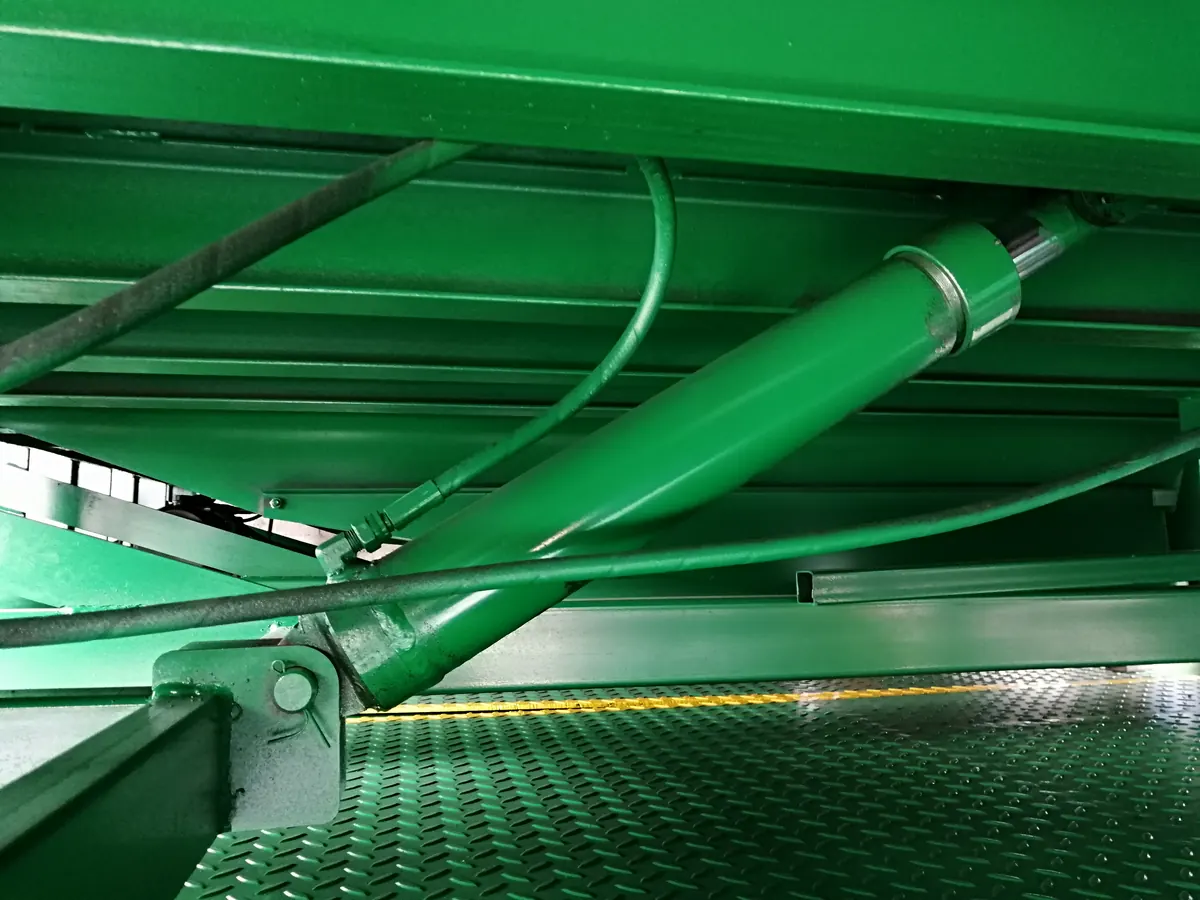
Look underneath the platform in the drawing, photographs, or approved technical information. The supporting members, connection points, and base relationship show how the supplier has described the complete load path for the quoted unit. Weilin Qinli's current Dock Leveler project images show a working platform above under-platform support members; one close-up also shows a hydraulic cylinder located below the platform. These images are useful for identifying where to look, but they are not a substitute for the approved structure of another model or project.
Ask the supplier to identify the following on the project documents:
- the platform or deck reference;
- the support structure shown below it;
- the connection between the platform and the quoted frame or base;
- the drawing revision that governs the supplied configuration; and
- any project conditions that change the structural configuration.
The practical question is how the quoted platform works with the material-handling route. Read its dimensions and surface with the vehicle position, equipment crossing the connection, cargo, and available dock layout. Read the support description with the same conditions, rather than treating it as a standalone list of steel members.
A Weilin Qinli Iraq warehouse project mentions a one-piece checkered steel platform and reinforced support structure. Those are details of that project, not a default specification; the quotation drawing must define the configuration being compared.
The Truck Interface: Identify the Front Bridging Element
At the vehicle side, the drawing should make clear how the platform is intended to meet the truck or trailer bed for the quoted configuration. This front interface is often one of the most important areas to identify before a buyer approves the specification, because it connects the leveler discussion to the actual fleet and loading route.
Do not assume that a term used by one supplier has exactly the same scope in another supplier's drawing. Ask for the name and reference used in that drawing, the vehicle-side condition it is based on, and the document that confirms the relevant dimensions or movement description. If an edge element, lip, hinge, or other interface part is listed, compare it with the actual truck or trailer information used for the quotation—not with a general photograph or a familiar component name.
Hydraulic Height Adjustment: Confirm the Project Configuration
Hydraulic height adjustment appears in current Weilin Qinli dock-leveler project cases as part of customised solutions. For a specific quotation, match the stated arrangement to the dock floor, expected truck or trailer height range, handling equipment, and installation-location conditions.
Ask for the supplier's configuration description and matching drawing. Record any cylinder, power unit, hose route, control item, or related component exactly as labelled for the quoted model. If a movement range, power requirement, or control description matters to the decision, it belongs in the model-specific documentation—not in an inference from another project image or case.
For a project-specific example of how platform dimensions, installation conditions, and hydraulic height adjustment can be documented together, see the Mongolia dock leveler project.
Pit, Frame, and Building Interfaces: Keep Equipment and Site Scope Separate
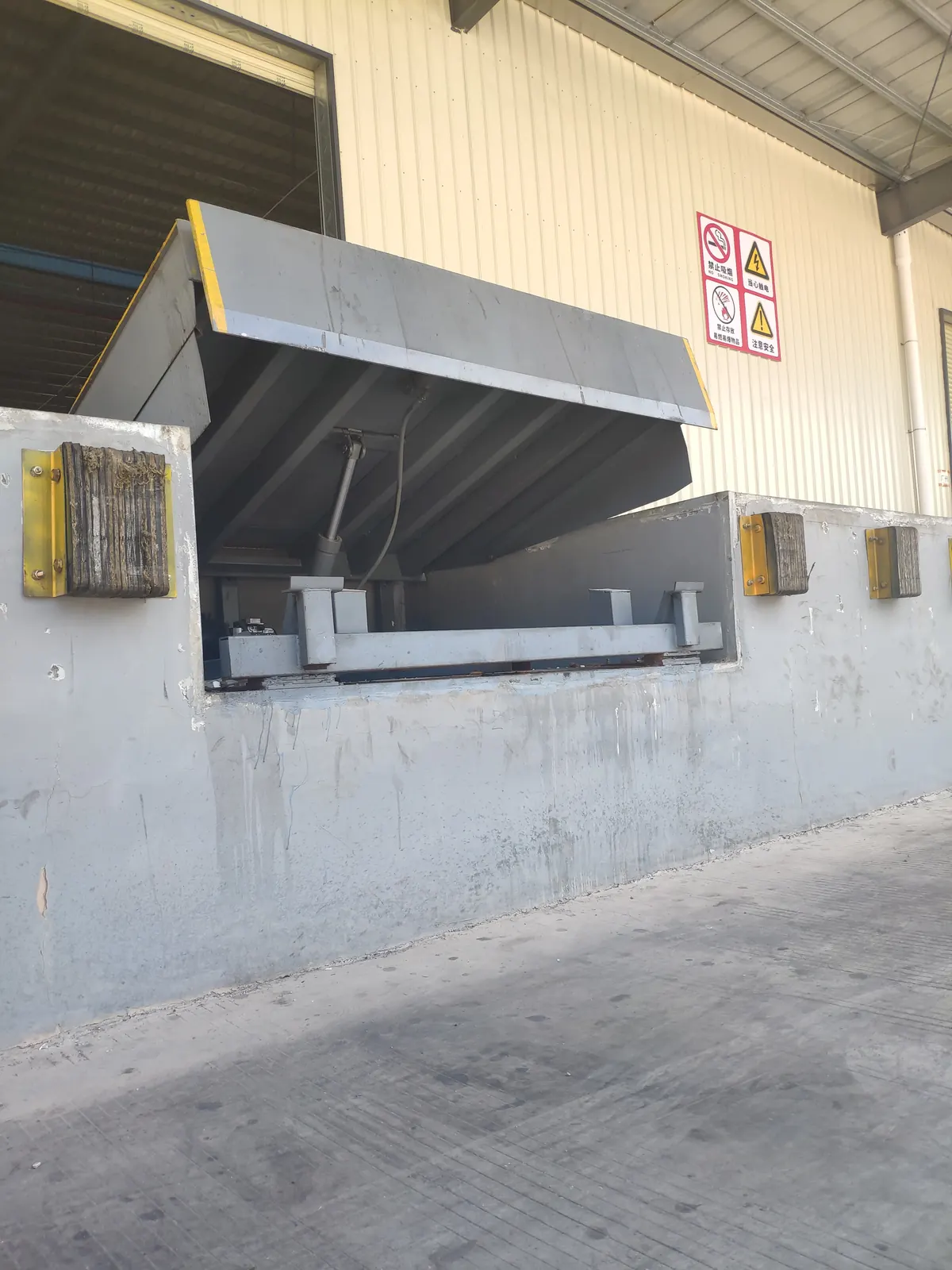
A dock leveler may be shown within a pit or dock opening, but the presence of that outline in a drawing does not answer every building question. Buyers should distinguish the equipment drawing from the site work, structural design, civil work, utility routing, and installation responsibilities that may sit around it.
Use the quotation and drawing to mark the boundary between:
- the quoted platform, support structure, and adjustment components;
- the quoted frame or base, if one is included;
- the pit, dock opening, slab, wall, or supporting construction;
- adjacent dock equipment such as bumpers, doors, shelters, or restraints; and
- controls, power supply, or other site interfaces identified for the project.
Weilin Qinli's client FAQ records that pit planning needs to be considered in advance; it is not a universal pit-size instruction. For procurement, the key impact is scope: an unclear pit, frame, power, or site-work boundary can make two quotations look comparable when they cover different work. Mark the boundary before comparing price, delivery, or components.
When a project needs technical drawings, configuration details, and a quotation tied to confirmed conditions, the customization process shows the information Weilin Qinli requests and prepares during that discussion.
Control and Safety Items: Request the Applicable Model Documents
If a quotation refers to a control item, guard, device, interlock, operating instruction, or test requirement, ask for the exact applicable document. Record whether it is supplied with the equipment, required from the site, optional, or outside the present scope. This avoids assuming that a feature shown in another photograph or project applies to the quoted model.
Four Checks Before You Finalise the Specification
Before sign-off, make sure the project record answers four questions:
- Is every component named exactly as it appears in the quotation or drawing?
- Does the current drawing revision link that component to the quoted configuration?
- Is the vehicle, handling, dock, or site condition that affects the item recorded?
- Is any missing dimension, interface, responsibility, or model document still visible as an open question?
Specify the Information, Not Just the Name
The value of a dock leveler component list is the ability to connect every quoted item to a drawing, a project condition, and a clear scope boundary. Start with the platform and support structure, then identify the vehicle-side interface, adjustment arrangement, and site interfaces around the equipment.
If you are reviewing a dock leveler project, send project requirements to Weilin Qinli with your dock layout, truck or trailer height range, load-handling information, available dock dimensions, and any existing drawings or quotations. The project team can then discuss a configuration against the conditions that actually apply to your loading operation.