
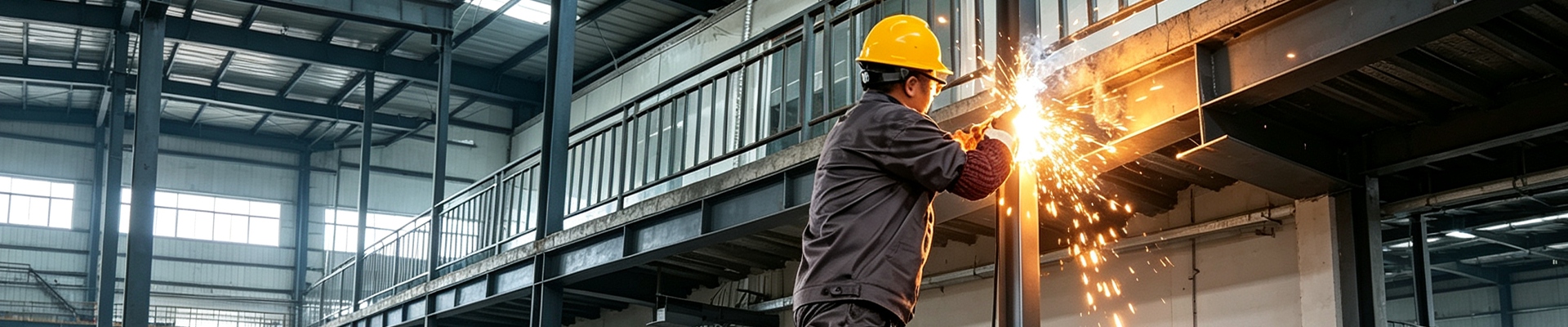
A hydraulic cargo lift raises and lowers goods by using pressurized hydraulic fluid. An electric motor drives a hydraulic pump, which sends oil into a cylinder. The pressure pushes a piston upward, moving the platform directly or through chains and lifting mechanisms. When the lift descends, control valves release the oil at a controlled rate.
Unlike a passenger elevator, a hydraulic cargo lift is designed primarily for pallets, equipment, raw materials, and other heavy loads. It is commonly used in warehouses, factories, workshops, logistics centers, and mezzanine applications.
What Is a Hydraulic Cargo Lift?
A hydraulic cargo lift, also called a hydraulic cargo elevator or hydraulic freight lift, is a vertical material-handling system designed to move goods between floors or working levels.
Its main advantage is flexibility. The system can be designed around the required load capacity, lifting height, platform size, number of stops, loading method, and available installation space. Some guide-rail designs can be installed above ground, which may reduce the need for extensive pit construction. However, the final design must always consider the building structure, local regulations, and intended load.
How Does a Hydraulic Cargo Lift Work?
The operating cycle can be understood in five stages.
1. The Control System Receives a Command
When the operator presses the up or down button, the control panel or PLC checks the safety circuit. Door interlocks, limit switches, overload sensors, and emergency-stop devices must be in the correct condition before movement is allowed.
2. The Motor Drives the Hydraulic Pump
The electric motor powers the hydraulic pump. The pump draws oil from the reservoir and sends it through filters, pipes, and control valves. The pump creates oil flow, while system pressure develops when the oil meets resistance from the cylinder and cargo.
3. Pressurized Oil Moves the Cylinder
The control valve directs hydraulic oil into the cylinder. The oil pushes against the piston, converting hydraulic energy into vertical movement. Depending on the design, the cylinder may raise the platform directly or operate chains, a lifting beam, or another mechanical transmission system.
As a simple illustration, a 50 mm diameter piston operating at 100 bar can theoretically generate approximately 19.6 kN of force, equal to about 2,000 kgf before friction, platform weight, eccentric loading, and safety factors are considered. This is only an engineering example, not a rated-capacity recommendation.
4. Guide Rails Keep the Platform Stable
Hydraulic pressure supplies lifting force, but guide rails and guide shoes control the platform’s path. They help prevent sideways movement, tilting, and excessive stress on the cylinder.
This is particularly important when a forklift drives onto the platform or when cargo is not perfectly centered. A lift should not be selected by cylinder force alone. The platform, frame, guide rails, anchors, and building structure must also withstand the expected load.
5. Valves Control Lowering and Stopping
To lower the platform, the control system opens a valve so hydraulic oil can return to the reservoir. The platform descends under gravity and cargo weight, while the valve controls the oil flow and lowering speed.
A properly designed hydraulic system should not simply drop when the pump stops. Check valves, flow-control valves, rupture valves, limit switches, and emergency-lowering systems help control movement and reduce the risk of uncontrolled descent.
Main Hydraulic Cargo Lift Components
| Component | Main Function |
|---|---|
| Hydraulic pump unit | Generates oil flow and system pressure |
| Electric motor | Provides power to the pump |
| Oil tank and filter | Stores and cleans hydraulic oil |
| Hydraulic cylinder and piston | Converts fluid pressure into linear movement |
| Control valves | Regulates direction, speed, pressure, and leveling |
| Guide rails and guide shoes | Keeps the platform aligned vertically |
| Platform and steel frame | Supports cargo and transfers the load |
| Gates and door interlocks | Prevents operation when access doors are open |
| PLC and sensors | Manages movement, position, overload, and safety signals |
| Rupture valve and emergency stop | Reduces risk during hose failure or abnormal operation |
Hydraulic Cargo Lift vs. Traction Freight Elevator
| Factor | Hydraulic Cargo Lift | Traction Freight Elevator |
|---|---|---|
| Driving method | Hydraulic cylinder and fluid pressure | Motor, ropes, sheave, and counterweight |
| Typical application | Low-rise and heavy-duty material handling | Taller buildings and higher-speed service |
| Installation flexibility | Above-ground or pit-based designs may be available | Usually requires a more complete shaft system |
| Main strength | High load capacity and customization | Greater speed and vertical travel |
| Main limitation | Speed and travel height may be limited | More complex installation and structural requirements |
The correct choice depends on travel height, speed, building layout, load type, and local code requirements. Neither system is automatically better for every project.
Safety Features That Matter
Safety should be evaluated as a complete system rather than as a single component. Important features include:
- Door interlocks;
- Upper and lower limit switches;
- Overload protection;
- Emergency-stop buttons;
- Rupture or velocity-control valves;
- Guardrails, toe guards, and protective enclosures;
- Clearly marked rated capacity;
- Controlled emergency lowering;
- Even load distribution;
- Lockout/tagout procedures during maintenance.
In the United States, applicable requirements depend on the lift classification and local authority having jurisdiction. ASME A17.1/CSA B44 is a major North American reference for elevator design, installation, operation, inspection, testing, and maintenance. ASME A17.1 reference
OSHA also highlights the importance of safe clearances, unobstructed access, equipment inspection, and fall protection in warehouse environments. Certain loading platforms with exposed edges 4 feet or more above a lower level may require fall protection under applicable conditions. OSHA warehouse safety guidance
How to Choose the Right Hydraulic Cargo Lift
Before requesting a quotation, prepare the following information:
- Maximum cargo weight, including pallets or containers;
- Forklift or pallet-jack loading requirements;
- Lifting height and number of stops;
- Platform width, depth, and door direction;
- Indoor or outdoor installation;
- Required lifting speed and daily operating cycles;
- Pit, floor, wall, and anchoring conditions;
- Local power supply and control requirements;
- Required guarding, certificates, installation, and training.
For example, a warehouse moving 1,000 kg pallets to a mezzanine needs more than a “1-ton lift.” The design should also consider pallet weight, forklift impact, uneven loading, platform weight, braking distance, and supporting-structure strength.
A Practical Warehouse Example
Consider a two-level warehouse where pallets must move from the ground floor to a mezzanine. A suitable solution may include a steel platform, guide rails, hydraulic cylinders, interlocked landing gates, overload protection, and control stations at both levels.
The supplier should confirm the platform size, lifting height, entry direction, floor loading, and daily operating frequency. A site drawing and load assessment can prevent common problems such as insufficient clearance, incorrect door alignment, or unsuitable anchoring.
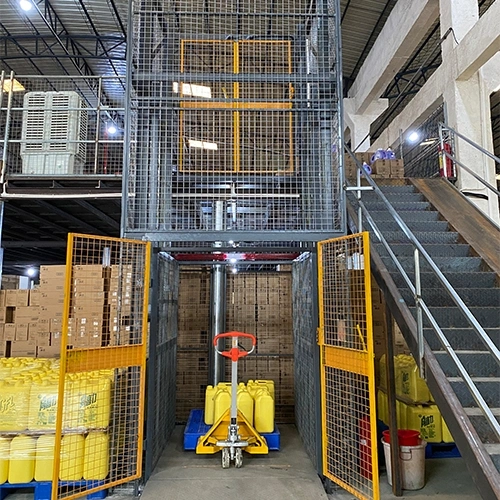
Hydraulic cargo lift for warehouse mezzanine material handling
According to the U.S. Bureau of Labor Statistics, the 2024 recordable injury and illness rate for the broader warehousing and storage industry was 4.8 cases per 100 full-time workers. This is not a lift-specific statistic, but it shows why safer material-flow design deserves attention in warehouse projects. BLS 2024 industry data
Conclusion
A hydraulic cargo lift works by using pump-generated oil pressure to move a cylinder and lifting platform. The pump provides power, the cylinder creates movement, valves control speed, guide rails maintain alignment, and safety devices protect people and equipment.
The best solution is not necessarily the largest or cheapest lift. It is the system correctly matched to the cargo, building, travel height, loading method, operating frequency, and local requirements.
Frequently Asked Questions
How does a hydraulic cargo lift go up and down?
The pump sends pressurized oil into the cylinder to raise the platform. During lowering, control valves release the oil back to the reservoir at a controlled rate.
What is the difference between a hydraulic cargo lift and a freight elevator?
A hydraulic cargo lift uses fluid pressure and a cylinder for vertical movement. A traction freight elevator uses an electric motor, ropes, sheaves, and often a counterweight.
Does a hydraulic cargo lift need a deep pit?
Not always. Some above-ground or holeless configurations may reduce pit requirements. The correct option depends on lifting height, structure, local code, and site conditions.
Can people ride in a hydraulic cargo lift?
Not unless the equipment is specifically designed, certified, and permitted for personnel transportation. A cargo lift should never be treated as a passenger elevator.
What happens if the power fails?
The motor and pump stop, while valves and safety devices are designed to keep the platform controlled. Some systems also include manual or emergency lowering functions.
How do I calculate the required load capacity?
Include the cargo, pallet, container, forklift impact, platform weight, eccentric loading, and any dynamic forces. A qualified supplier or engineer should confirm the final capacity.
Request a Custom Hydraulic Cargo Lift Solution
For a project-specific recommendation, provide the required load capacity, lifting height, platform size, number of stops, loading method, installation location, power supply, and site photos.