
In a warehouse or factory, a hydraulic cargo lift moves goods between floors while workers load and unload at each landing. A platform that descends unexpectedly, is overloaded, or moves while someone is in its travel area can cause injury, damage goods, and interrupt work. Safety features help reduce these risks by controlling the lift’s movement and limiting access to hazardous areas. This article explains the main safety features and what to check when selecting, using, and maintaining a hydraulic cargo lift.
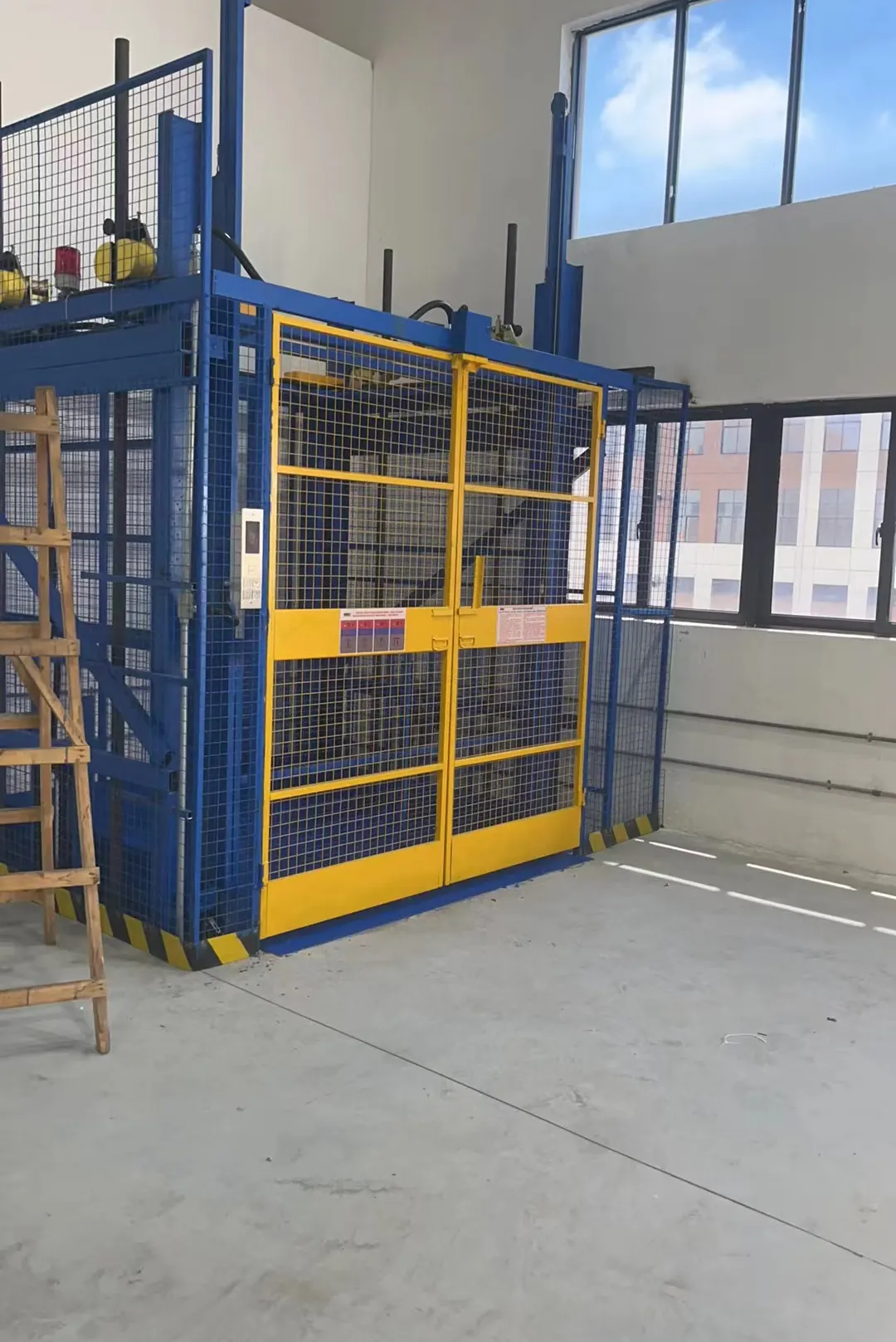
Hydraulic cargo lift with landing gate and mesh enclosure
1. Hydraulic System Safety Features
Hydraulic cargo lifts rely on pressurized oil to raise the platform and control its descent. A ruptured hydraulic line or, on a chain-driven lift, a broken lifting chain may cause the platform to descend unexpectedly. Excessive hydraulic pressure can also damage components. The safeguards below address these risks. Check the equipment documentation for the features fitted to a particular lift.
Hose Burst Valve
If a hydraulic line ruptures, oil may flow out of the lifting cylinder too quickly and the platform may begin to descend rapidly. A hose burst valve reacts when oil leaves the cylinder faster than a preset flow rate, restricting the flow to slow or stop the descent. Because the valve responds to a sudden increase in flow, a slow leak or another cause of platform drift may not trigger it.
Mechanical Anti-Drop or Locking Devices
On some chain-driven cargo lifts, a broken lifting chain triggers an anti-drop catch that grips the guide rail and arrests the platform’s descent. One type of landing lock uses pins that engage fixed supports when the platform reaches a landing, holding it steady during loading and unloading.
Pressure Relief Valve
A pressure relief valve is set to open at a specified hydraulic pressure. When the circuit reaches that pressure, the valve diverts oil back to the tank to limit further pressure rise and protect hydraulic components. It does not directly measure cargo weight or replace overload detection.
Manual Emergency Lowering
If power fails, the platform may stop between landings. Where a manual emergency lowering device is fitted, trained personnel can use it to lower the platform by following the lift’s instructions. Whether it can be used after another fault depends on the cause of the stoppage and the procedure for that lift.
2. Gates, Interlocks, and Enclosures
Workers approach the lift at each landing to load and unload goods. Keeping people away from the platform’s travel path during operation helps reduce the risk of falls and contact with moving equipment.
Landing Gate Interlocks
Landing gate interlocks coordinate gate access with platform movement. They keep a gate locked unless the platform is stopped at that landing, and prevent the lift from moving until the gate is safely closed. This helps prevent people from entering the travel area when the platform is elsewhere and keeps the platform stationary while the gate is open for loading or unloading.
Shaft Enclosures and Mesh Fencing
An enclosure separates the platform’s travel path from surrounding work areas. Depending on the installation, it may use solid panels, mesh fencing, existing walls, or a combination of these. It helps keep people and loose objects out of the travel path.
Platform Guardrails
Open or partly enclosed cargo lifts may have guardrails along the platform’s exposed edges. The guardrails move with the platform and reduce the risk of goods falling during travel. A fixed enclosure serves a different purpose: it restricts access to the lift’s travel area.
Safety Edges
A safety edge may be fitted beneath or along an exposed edge of the platform. If it contacts an obstruction during descent, it is intended to stop downward movement and reduce the risk of crushing. Its location and response should be checked on the specific lift.
3. Overload and Control Safeguards
Safe operation depends on both the load placed on the platform and the way its movement is controlled. The safeguards in this section warn of excess load or stop controlled movement when a travel limit is reached or an emergency stop is activated.
Overload Sensors and Alarms
A rated-capacity label shows the maximum permitted load, but cannot tell whether the platform is overloaded. On lifts equipped with load sensors, an overload triggers a warning and, in some designs, prevents the platform from starting. Load placement matters too: even when the total weight is below the rated capacity, goods concentrated on one side can place uneven stress on the platform.
Emergency Stop Buttons
If an operator notices a hazard, they can press the emergency stop button. This stops controlled platform movement so the situation can be addressed before operation resumes.
Upper and Lower Limit Switches
The upper limit switch stops further upward movement at the top of the intended travel, while the lower limit switch stops further downward movement at the bottom. They help prevent overtravel and serve a different purpose from the controls used to stop or level the platform at an intermediate landing.
4. What Safety Checks Should Be Made Before Use?
Before using a hydraulic cargo lift, follow its operating manual and the site’s procedures. Check the rated capacity, include the weight of pallets or handling equipment in the load, and place goods evenly on the platform. Make sure the landing gates are closed, any enclosure or guardrails fitted to the lift show no visible damage, and the emergency stop button is accessible. From a safe position, look for visible hydraulic leaks and obstructions at the loading points or in the visible parts of the travel area. When the lift begins to move, watch for unusual noises, shaking, or irregular movement.
If anything appears wrong, stop using the lift and report the problem. Do not bypass an interlock or other safety device to keep it running.
5. How Should Hydraulic Cargo Lift Safety Features Be Maintained?
Safety features need regular maintenance to keep working as intended. The maintenance plan and schedule should follow the equipment manual and applicable local requirements.
Preventive Maintenance
A maintenance plan should cover the hydraulic system, landing gate mechanisms, interlocks, and control components fitted to the lift. Worn or damaged parts should be replaced before they affect operation. Work that involves adjusting settings or verifying safety functions should be carried out by personnel with the appropriate qualifications, using the prescribed procedures.
Fault Repair and Return to Service
If a fault is found, take the lift out of service and repair its cause. Appropriately qualified personnel should then follow the equipment procedure to verify the affected safety functions before the lift returns to service.
Maintenance Records
Record the maintenance date, preventive work completed, problems found, parts replaced, repairs made, and the results of checks before return to service. This history helps identify recurring faults and plan later maintenance.
6. Conclusion
Safe operation of a hydraulic cargo lift depends on its equipment configuration, proper use, and ongoing maintenance. When choosing a lift, confirm that its safety features suit the loads, installation conditions, and way it will be used. After installation, routine checks and maintenance help keep those features working as intended.
Planning a cargo lift for your warehouse or factory? Tell Weilin Qinli about your goods, lifting height, and installation site so the team can discuss a suitable configuration with you. Share your project requirements.
7. Frequently Asked Questions
How safe are hydraulic cargo lifts?
Safety depends on the lift’s design, installed features, correct use, and ongoing maintenance. The hydraulic drive alone does not establish how safe a particular lift is. Buyers should review the equipment documents and confirm that its safeguards suit the intended installation and load. For other factors to consider when choosing equipment, see the hydraulic cargo lift selection guide.
What helps prevent uncontrolled descent in a hydraulic cargo lift?
A hose burst valve can limit rapid descent if a hydraulic line ruptures and the oil flow reaches the valve’s trigger level. On some chain-driven lifts, a mechanical anti-drop device can arrest the platform if a lifting chain breaks. The protection available depends on the specific lift.
Can a cargo lift operate with its landing gate open?
No. A functioning landing gate interlock prevents platform movement while the gate is open. It should also keep the gate locked when the platform is away from that landing. If either function fails, stop using the lift and report the fault.
What happens to a hydraulic cargo lift during a power outage?
A power outage stops normal electrically powered operation. Whether the platform can be lowered afterward depends on the lift’s equipment and instructions. If manual emergency lowering is provided, trained personnel should follow the procedure for that lift.